
AI in Clinical Trials
Moving from Experimentation to Operationalization
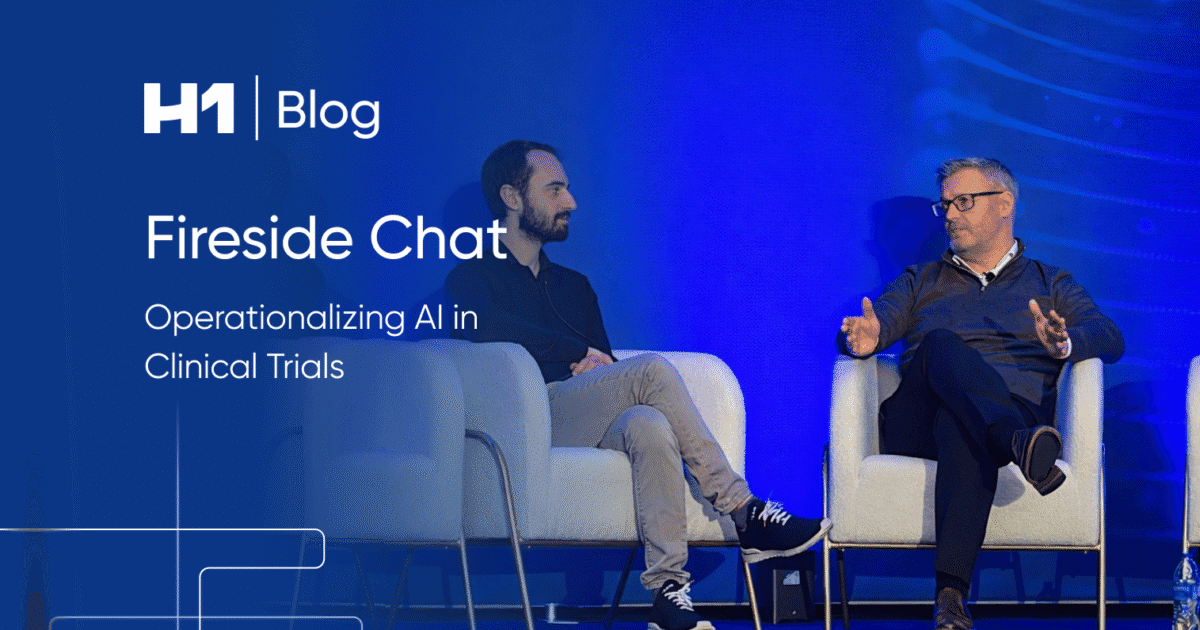
At Fierce JPM Week 2026, Ariel Katz, CEO and Co-founder of H1, sat down with Paul Bridges, PhD, President of Parexel’s Consulting organization, for a fireside chat that cut through the AI hype to address pharma’s most urgent question: How do we move beyond pilots to actually implement AI at scale in 2026?
Their conversation revealed a stark reality: companies still experimenting with AI risk falling into what they called “the Dark Ages,” while those operationalizing proven AI use cases are already seeing transformative results.
AI Has Reached Scale in Key Areas—It’s Time to Operationalize
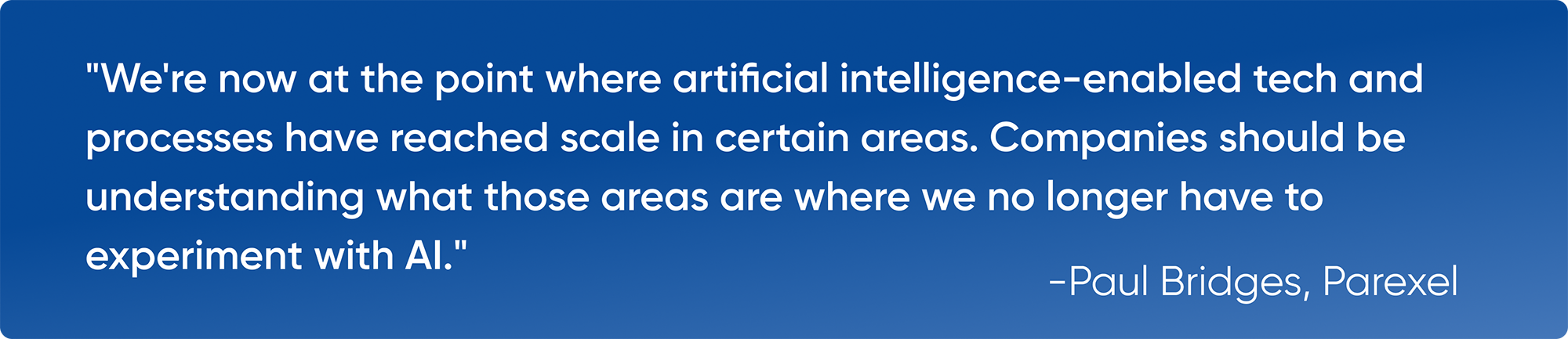
The experimentation phase is over for critical clinical trial processes. The industry has reached a clear inflection point.
Several use cases are already table stakes for 2026:
- Site selection
- Patient profiling
- Feasibility analysis
- Protocol design
- Regulatory and medical writing
The challenge for 2026 is identifying those areas clearly, putting processes around them, and training teams to understand where AI is real now. This distinction between experimentation and operationalization isn’t semantic—it’s existential for companies trying to maintain competitive timelines and budgets.
Making the Build vs. Partner Decision
One of the most practical discussions centered on whether companies should build AI capabilities internally or partner externally.
“The strategy at Parexel is to try to avoid developing tech where we can, and so where it’s likely to be commoditized, we’re going to partner,” Bridges explained. This approach—partnering for commoditized capabilities while building only for unique niche processes—reflects a maturation in how the industry thinks about AI investment.
For sponsors, the path forward is clear: “There are key areas where AI is table stakes this year, so it’s understanding which areas those represent in the clinical trial development continuum, defining them and then interrogating companies about what they offer,” Bridges noted.
The biggest challenge? “Just simply the claims and the volume of companies making claims about what they can do,” Bridges observed. Filtering out what’s real from what’s not is critical for 2026.
Real-World Impact: Speed, Quality, and Risk Reduction
The tangible results speak for themselves: Parexel cut preparation and submission time for INDs from an average of three months to three weeks by partnering with an AI platform for regulatory writing.
“But the time savings, while impressive, aren’t the only benefit. “The saving of those two and a half months is leveraged by spending that time making sure that you’ve got a strong case and your data is compliant and sound right the first time,” Bridges explained.”
AI’s value isn’t just efficiency; it’s about reducing risk. In biotech, where funding windows are tight and regulatory delays can be catastrophic, getting submissions right the first time is critical. And at a time when the FDA faces significant disruption, quality submissions matter more than ever.
The Governance Challenge: Making AI Compliant and Controllable
Successful AI implementation requires robust governance frameworks. When evaluating AI vendors, companies should ask pointed questions:
- Where do you have scale?
- Where do you have SOPs that control it?
- Are you managing risk and defining that risk in terms of regulatory scrutiny?
- Have you had conversations with the FDA?
- Do you expect this to require an audit or compliance review?
In 2026, bold claims from AI vendors aren’t enough. Sponsors need to see evidence of operationalization, governance, and regulatory alignment.
The Existential Risk of Waiting
Not every company is moving quickly to adopt AI. Katz shared a scenario he’d encountered: a head of R&D at a mid-sized pharma company who said, “We’re gonna let the big guys experiment with AI. We’re going to take their best lessons.”
Katz’s reaction to that wait-and-see approach is telling: “I’m thinking it’s gonna be like two years, the company is going to be in the Dark Ages. If they’re still writing INDs, they’re still doing medical writing manually instead of using AI.”
The old wisdom that it’s better to be second or third to market with new technology no longer applies. Bridges recalled advice from a former boss: never be first to market with technology. But in today’s AI landscape, “that’s not true now, because the challenge with AI is that if you don’t adopt, it’s an existential problem for you.”
Companies that assume they can wait and learn from others risk falling so far behind that catching up becomes nearly impossible.
The Urgency of Moving Beyond Experimentation
The time for experimentation is running out. While some companies continue piloting AI tools, others risk falling irretrievably behind as AI becomes a minimum requirement for operational efficiency in drug development.
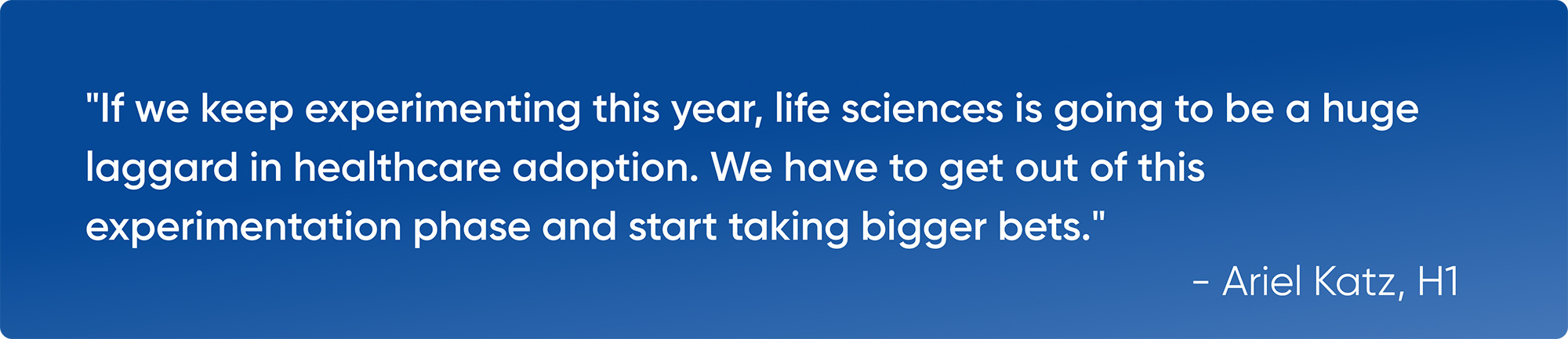
The challenge isn’t just about adopting technology—it’s about choosing which AI tools to use and implementing them with clear governance. “The hardest part is which AI tool do you use,” Katz acknowledged, given the proliferation of options from major players like Anthropic launching life sciences models to specialized vendors and smaller companies. Having a thoughtful assessment framework rather than continuing to experiment is what separates leaders from laggards.
Successful implementation requires top-down commitment. “If at a C-suite level you don’t understand it, you’re not going to get it right at the grassroots level,” Bridges emphasized.
Without clear mandates and accountability, AI adoption will stall at the PowerPoint stage.
The Path Forward
The imperative for 2026 is clear: operationalize AI where it delivers proven value. Both speakers outlined a practical framework that moves beyond experimentation to implementation:
- Identify the use cases where AI has reached proven scale
- Interrogate vendors rigorously about their capabilities, governance, and regulatory alignment
- Implement with proper SOPs and compliance frameworks
- Train teams from the C-suite down on what AI can and should do
- Mandate adoption across your teams where it makes sense, rather than leaving it optional
The companies that recognize AI as the cost of entry rather than experimental will define the next era of drug development. Those who don’t risk being left behind in what both speakers aptly called “the Dark Ages.”
Ready to move beyond AI experimentation and operationalize proven use cases in your clinical trials? Request a demo to see how H1’s AI-powered platform is helping leading pharma and biotech companies optimize clinical trial feasibility, accelerate site and PI selection, and streamline regulatory processes.
